Home security
Why deadbolt locks matter for home security
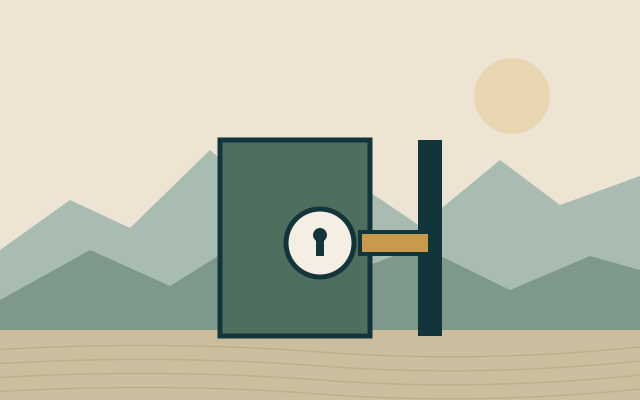
A spring latch, the slanted bolt in most doorknobs, holds a door closed. A deadbolt locks it. That difference is why nearly every security guide starts with the deadbolt.
How a deadbolt works
A deadbolt's bolt is square-ended and can't be pushed back by force on the bolt itself. It only moves when the key or thumb-turn moves it. Most extend about an inch into the frame, which makes the door much harder to force open.
Types of deadbolt
- Single cylinder – key outside, thumb-turn inside. The most common choice.
- Double cylinder – key on both sides. Useful near glass, but it can slow your exit in a fire; check local fire rules before choosing it.
- Keypad and smart deadbolts – a code or phone instead of a key, often with a key override.
ANSI grades
Deadbolts are graded by ANSI/BHMA. Grade 1 is the heaviest duty and is the usual recommendation for front doors and doors from the garage. Grade 2 is common in homes. Grade 3 is the lightest.
The upgrade most homes need
A strong deadbolt is only as good as what it locks into. Many strike plates are held by short screws into soft trim. Replacing them with a reinforced strike and long screws that reach the wall framing is one of the most cost-effective security upgrades you can make.
Installation
Doors without a deadbolt need a bore hole and a strike pocket. The price list shows new lock installation on a door without a hole starting at $85, and lock changes for basic locks from $25. New locks carry a 3-month warranty from the contractor. See the residential locksmith page.
Need help with this in Monrovia? Call 626-537-2261 for an estimate, or see the price list.
Related articles

Home security
5 situations when you need lock repair
Sticking keys, broken keys, sagging doors and break-in damage: when a repair is enough and when it isn't.
Home security
5 reasons to replace your existing locks
Rekeying solves who has a key. Replacing solves worn, weak or damaged hardware. Here's when to do which.

Home security
Why you should rekey your locks when you move
You don't know how many keys to your new home exist. Rekeying fixes that for far less than new locks.